
Live-In Home Health Care for Camden, Burlington, Gloucester & Atlantic Counties
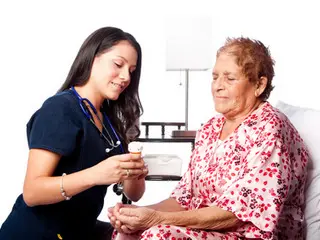
Live-in care in New Jersey, provided by Sunlight Care
Nothing is more important than helping people live full and dignified lives within the comfort of their own home. Sometimes that means providing home health care with a live-in caregiver. At Sunlight Care we provide affordable live-in home health care to residents who wish to remain at home, yet still have the comfort of knowing that someone is available to them 24/7.
What is a live-in caregiver?
Our live-in home health aides are trained to provide continuous comfort to your loved ones. A live-in home health aide lives with the client and is accessible when a need arises. Although live-in caregivers aren’t working 24/7, they are “on call” when your loved one needs care. Most live-in home health aides have extremely high work ethics. Many do not have driver’s licenses or a vehicle; however, if transportation is needed, other arrangements can be made with the scheduling department.
Our home health aides are trained and certified through the Board of Nursing and are qualified to provide personal care as well as homemaker services.
Live-in companion caregivers are also available. A live-in companion is trained for companionship and homemaker services. Live-in companions are not allowed to provide personal care, as they are not certified for it. Live-in companion caregivers are a strong fit for loved ones who can manage their own personal care but may need general companionship, additional help maintaining the home, or may have mild dementia or Alzheimer’s.
What services can be provided by a live-in caregiver?
Services that can be provided with a companion live-in caregiver include:
- Making of the bed and keeping the bedroom organized and safe to avoid falls
- Dusting or sweeping in the client’s living areas
- Medication reminders
- Meal service and feeding assistance as appropriate
- Making sure the bathroom is clean and free of standing water to help prevent slips
- Making sure the kitchen is clean to avoid contamination
- Taking out the trash
- Laundry
- Socialization
- And much more
Services that can be provided with a certified home health aide live-in caregiver include:
- Everything in companion care plus:
- Bathing, grooming, dressing, and toileting
- Assistance with transfers from bed/chair and walking
- Assistance with exercise and range of motion
- Incontinence care
What is the difference between live-in care and 24/7 hourly care?
Live-in caregivers live with the client in the comfort of the client’s home. This allows the same caregiver to be there for your loved one every day. The client and the live-in caregiver can form a strong bond. Live-in care is highly recommended for loved ones with dementia, since changing caregivers can be confusing. Live-in care is simpler and safer than many adult day care arrangements because there is no need for transport every morning and evening. Live-in caregivers must be able to get uninterrupted sleep breaks and meal/general breaks. If your loved one is at a facility and the care they need becomes more than what the facility can handle, that facility may need to discharge your loved one. Adding a live-in caregiver can help your loved one remain at the facility when appropriate.
If your loved one only sleeps a few hours at a time, you may need to supplement live-in care with an overnight relief caregiver so the live-in caregiver can take their uninterrupted sleep break if the client wakes frequently throughout the night (for example, needing to use the bathroom). A separate caregiver may be available for 6–8 hours during the night. If care throughout the day and evening becomes too much for a live-in caregiver because they are no longer receiving required breaks, 24/7 hourly care will be the best option.
With 24/7 hourly care, multiple caregivers are assigned in 8- or 12-hour shifts to care for your loved one. This option is necessary when constant care is required or if the client has no sleeping accommodations. The 24/7 option is also available to those who need additional assistance while living in a facility or who need constant monitoring because of unsafe wandering.
Why should I choose live-in care over an assisted living facility?
Assisted living facilities have many benefits; a live-in caregiver offers important advantages too. Your loved one can stay in their own home as opposed to moving into a smaller apartment with a few belongings. Clients who remain at home often manage early stages of dementia more easily. After many years in the same home, clients know where items are located, where the bathroom and kitchen are, and how to follow the routines they developed over the years. Moving them to a new location can make early-stage dementia harder, because adapting to new surroundings becomes more difficult. With live-in care they receive one-on-one care, whereas in a facility a caregiver may be responsible for several people during a shift. Your loved one can eat familiar foods at home compared to more limited menu options at many facilities. If your loved one has a pet, they can often keep that companion at home; many facilities do not allow pets for new residents. Financially, live-in care may be cost-effective: a live-in caregiver may cost about $6,000 a month, while assisted living can range from about $6,000 to $12,000 a month depending on the level of care needed.
Where does a live-in caregiver stay?
Live-in caregivers are provided a furnished room by the client in the home. A live-in caregiver may bring their own pillows or blankets; linens should be provided. Home conditions need to be safe for the client and for the caregiver. Clients or their families must also provide meals and toiletries for the live-in caregiver. If a spare room is unavailable, it may be possible to partition a common space.
Are there any state regulations for live-in caregivers?
Yes. Under labor laws, live-in caregivers are required to have sleep time, meal time, and free time. A caregiver qualifies as a live-in caregiver when they stay at least 120 consecutive hours (5 days) in the home.
How are we billed and how are caregivers paid?
We initially take a two-week service deposit, which is held on account and can be applied to your final bill or refunded. Billing is done biweekly and invoicing shows charges per day. Our live-in caregivers are paid weekly through direct deposit, and we handle payroll taxes and related insurances such as federal and state taxes, Social Security, and workers’ compensation.